
Cardboard recycling is one of the great PR successes of the modern era. The truth is more complicated: of the ~30 million tons of cardboard moved through American hands each year, a meaningful share never gets recycled — it gets contaminated with tape, gets put out wet, gets shredded for cushioning, or ends up in a dumpster behind an apartment building because nobody's getting paid to break it down.
We're a moving company, not a sustainability think tank. But the moving industry's quiet contribution to landfill is bigger than most operators want to admit, and we exist in part because the math on reusable beats cardboard cleanly once you actually do it.
The lifecycle math
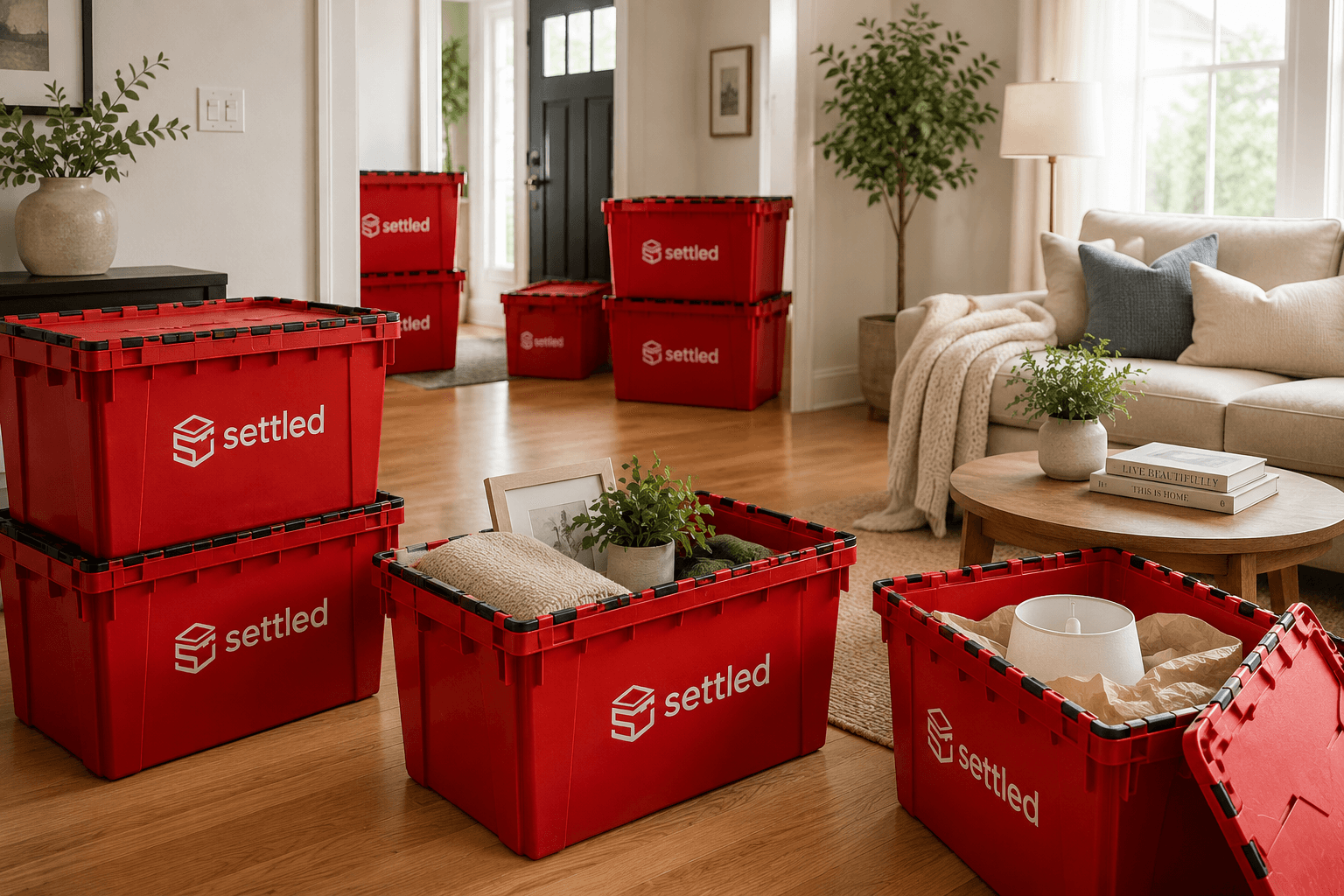
A single Settled bin lasts well over 100 cycles before retirement — heavy-fleet commercial bins are rated for 400+ uses, and even the most conservatively maintained reach triple-digits. Each cycle replaces a cardboard box that would otherwise have been built, used, and recycled (or trashed). Conservative math: one bin = 100+ boxes saved over its lifetime, factoring in the early retirements and the 10-15% of cycles that don't fully replace a cardboard equivalent (some users would have moved without buying boxes anyway).
What about the bin's own footprint?
Plastic isn't free. The manufacturing carbon, freight, and end-of-life disposal of one bin are roughly equivalent to producing 6-7 cardboard boxes. So the bin breaks even environmentally around its 7th use, then nets positive for the rest of its life. Across our fleet, the average bin runs net-positive within its first nine months in service.
End-of-life: when a bin retires, it's recycled at a partner facility. The polypropylene goes back into industrial pellet stock for non-food-grade applications — second-life uses include automotive parts, plant pots, and other moving bins. Roughly 92% of a retired bin's mass re-enters the supply chain.
Zero-tape moves
The downstream win is the one most people miss: every roll of packing tape avoided is roughly 30 yards of plastic film that won't end up in a recycling stream that can't process it anyway. (Most municipal recycling can't handle plastic film at all; tape contaminates the cardboard around it.) A typical Settled move displaces 4-6 rolls of tape, which adds up fast at scale.
What this means for an individual move
A one-bedroom move with Settled instead of cardboard:
- Avoids ~25 cardboard boxes from being manufactured, freighted, and recycled (or trashed)
- Avoids ~5 rolls of plastic packing tape (≈150 yards of film)
- Avoids the cardboard pile by the curb that the city has to send a truck for
- Reduces breakage of moved items by roughly 30% (plastic beats corrugated for impact)
It's not enough to reverse climate change on its own. But it's a real, measurable, individual-decision win — the kind of thing that compounds across a city of move-volume over a decade.